We manage a health and wellness site that launched in March 2026. No ads have ever run on it. This is what happened.
The first few months were quiet
Through May and most of June, almost nothing showed up in Google. The site had content, but search engines had no reason to trust it yet. Impressions sat near zero.
In July, Google started picking it up. AI features began showing the site about 2,000 times a day. Regular search impressions climbed slowly.
Then it took off
Around August 21, daily AI impressions started rising fast. By early September they passed 13,000 a day. By late September the site was appearing 25,000 to 38,000 times a day in Google's AI features alone.
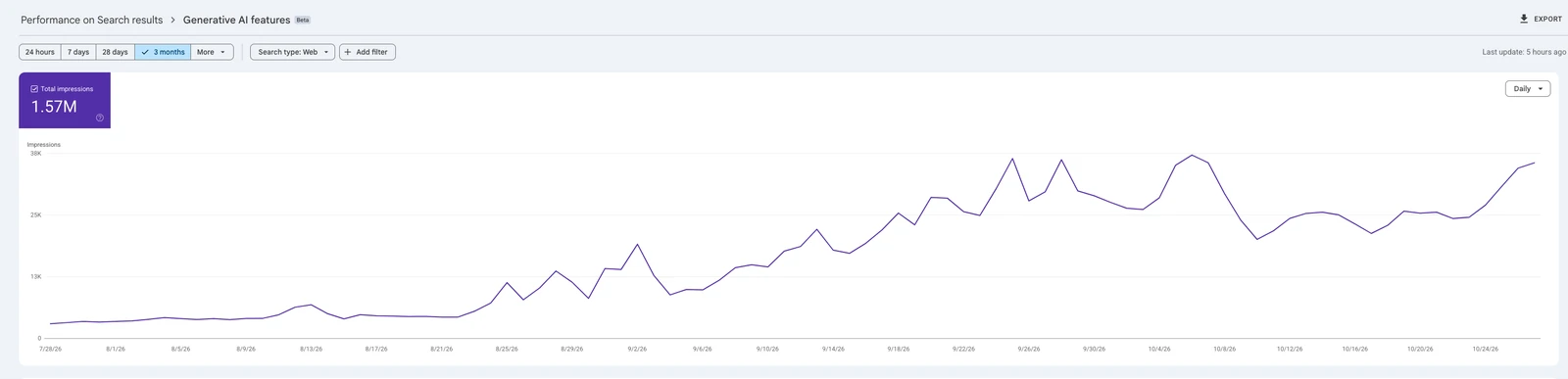
Google Search Console, AI features. Jul 28 to Oct 27, 2026. Total: 1.57M impressions.
Microsoft Copilot followed. In early August it cited the site about 1,000 times a day across roughly 50 pages. By October that had grown to 6,000 to 8,000 citations a day across more than 200 pages.
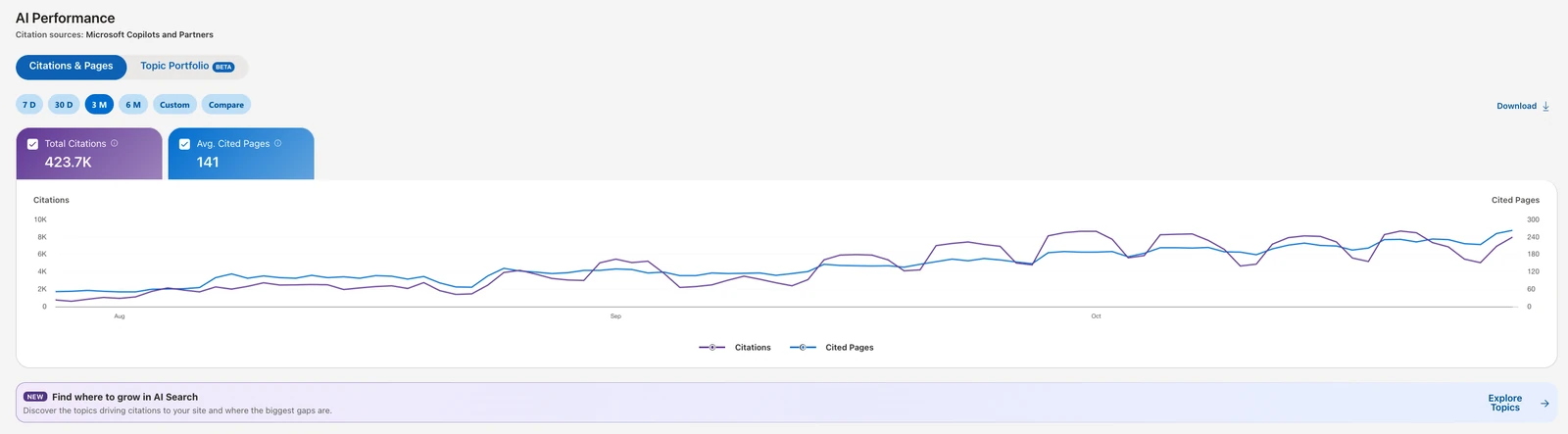
Bing Webmaster Tools, Copilot citations. 3 months to late Oct 2026. Total: 423.7K citations, average 141 pages cited.
Regular Google search grew underneath. Over six months the site collected 6.26 million impressions and 37,100 clicks, with an average position of 7.4.
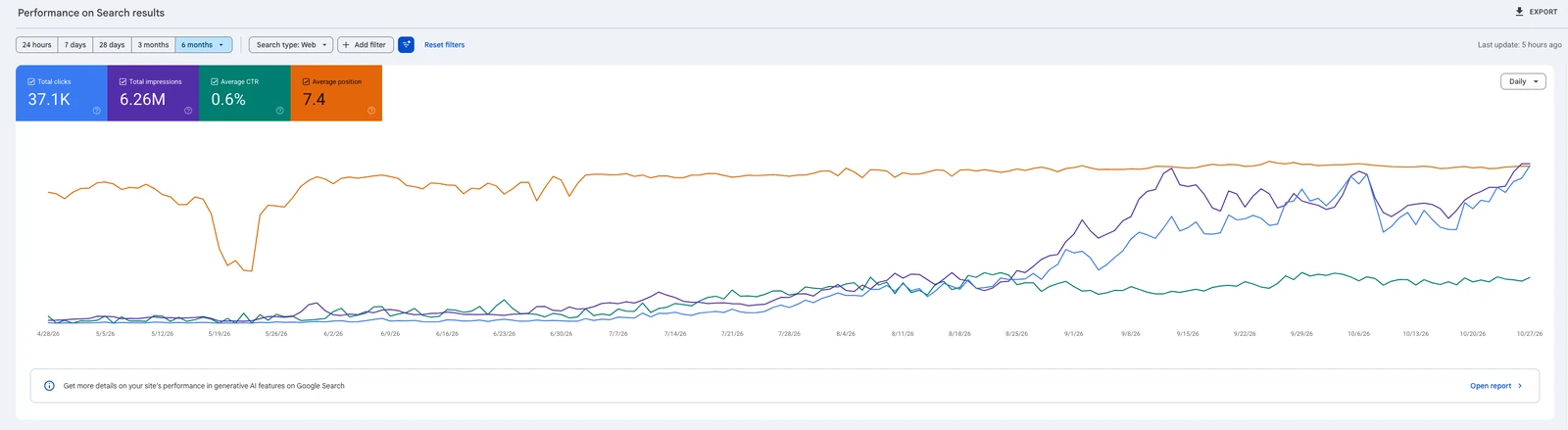
Google Search Console, search results. Apr 28 to Oct 27, 2026.
Bing added another 158,200 impressions and 2,400 clicks in three months.
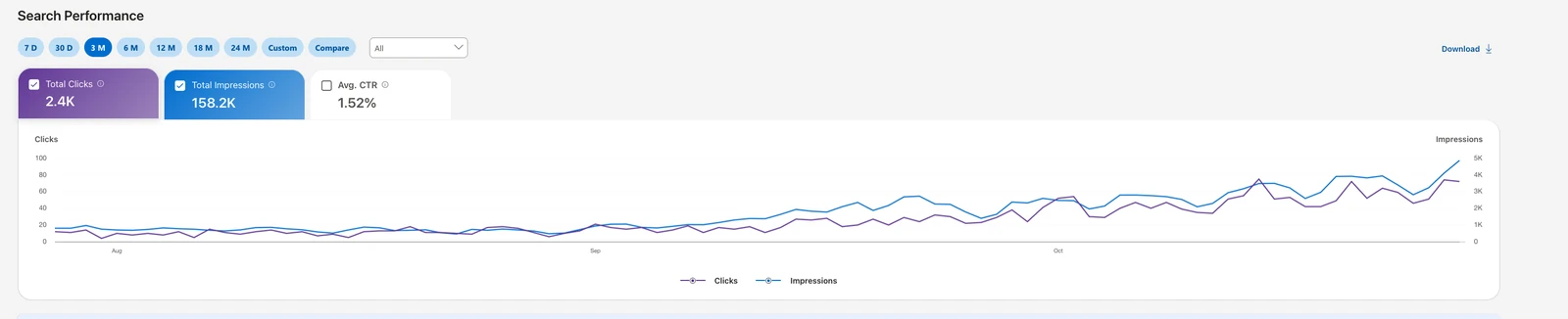
Bing Webmaster Tools, search performance. 3 months to late Oct 2026.
No money went to ads
Every number above is organic. The site has never run Google Ads, Microsoft Ads, Facebook ads or any other paid promotion. The budget went to writing and paying expert reviewers.
What the site actually did differently
None of this is a secret. It is just work that most sites skip.
Each page opens with a direct answer to the question in its heading, in two to four sentences, before the explanation. This is the format Google AI Overviews and Copilot pull from most easily.
Every factual claim links to a source. More than 300 articles were published over the period, mostly citing PubMed papers and government databases. Each citation was checked against the original paper to make sure the link, title and year matched.
A medical doctor, pharmacists, registered dietitians and a PhD scientist reviewed the content. Their names and credentials are on every page they reviewed. This is not decoration. Google's quality guidelines treat named, verifiable expertise as a ranking signal for health content.
Every page carries structured data: article markup, FAQ markup where relevant, product and organization schema. The site publishes an llms.txt file and allows all major AI crawlers. Sitemaps are submitted to both Google and Bing.
No two articles target the same question. Each one is written for a specific search query. This keeps pages from competing with each other in results.
Does this only work for large sites?
The site in this case study publishes hundreds of pages because its market has hundreds of questions. A local bakery or plumber does not need that many. It needs the same foundations at a smaller scale: clear pages that answer what its customers ask, correct business details, and structured data that tells search engines and AI assistants what the business is and where it operates.
Health and wellness is one of the hardest categories to rank in, because Google holds that content to a stricter standard. A local service business usually faces far less competition. Results depend on the market, and nobody can guarantee rankings or AI citations. What we can guarantee is that your site gets the same groundwork.